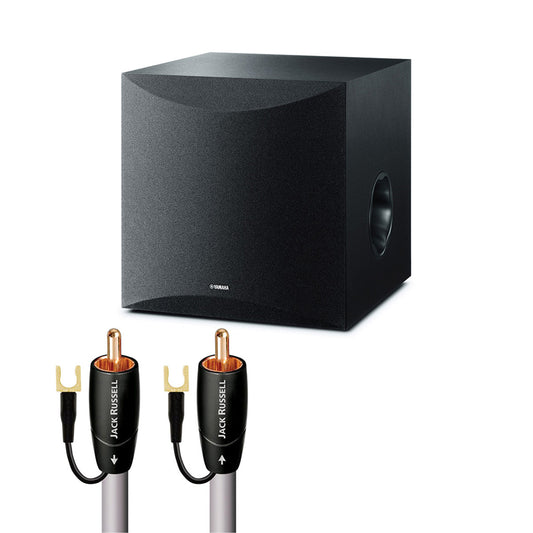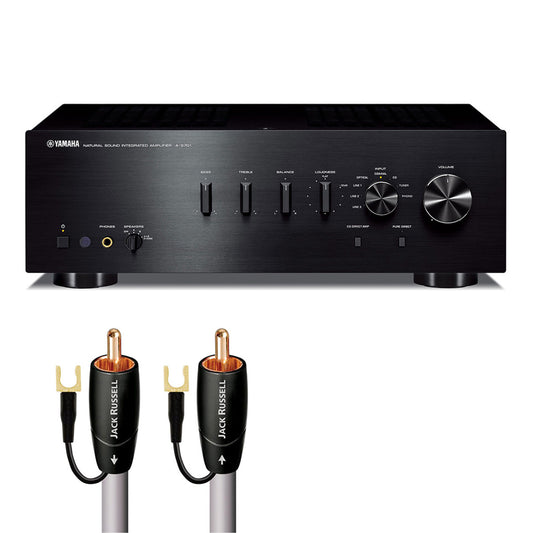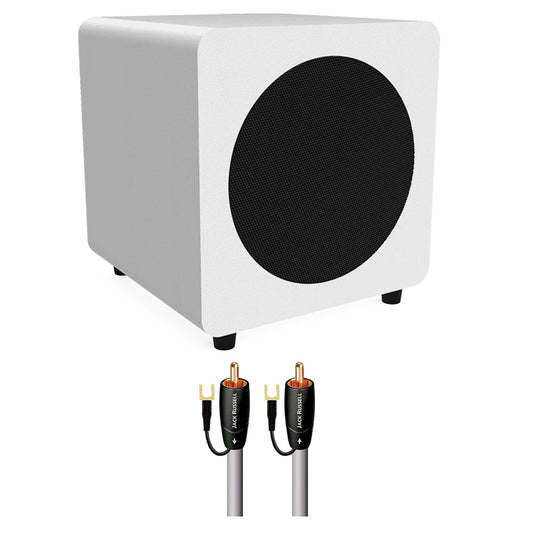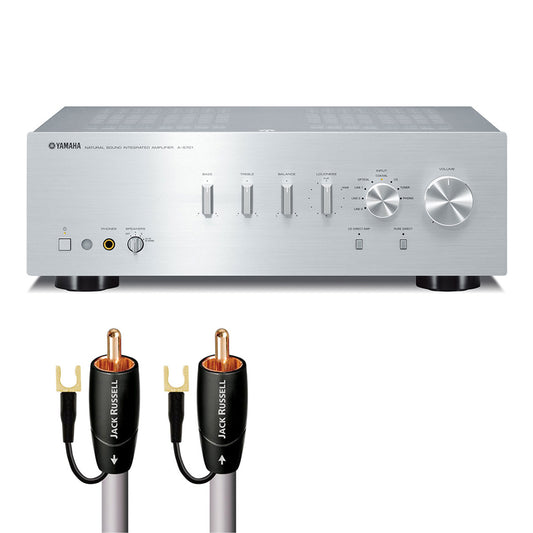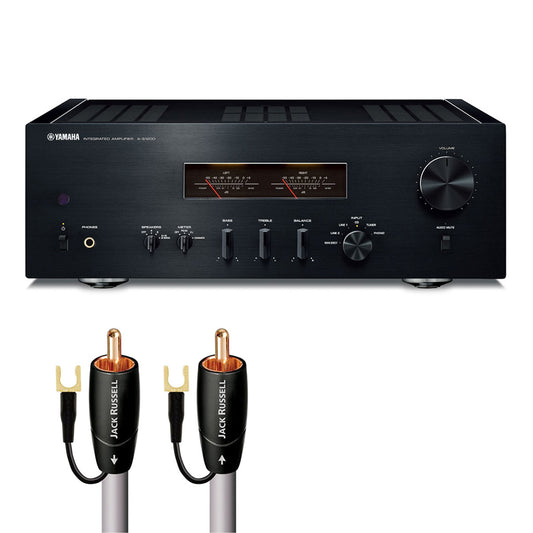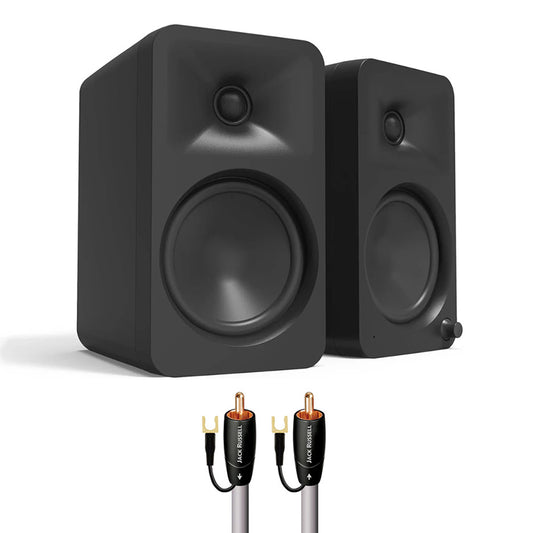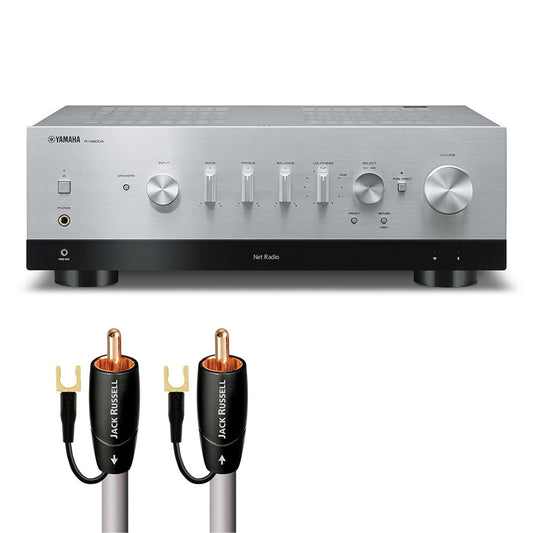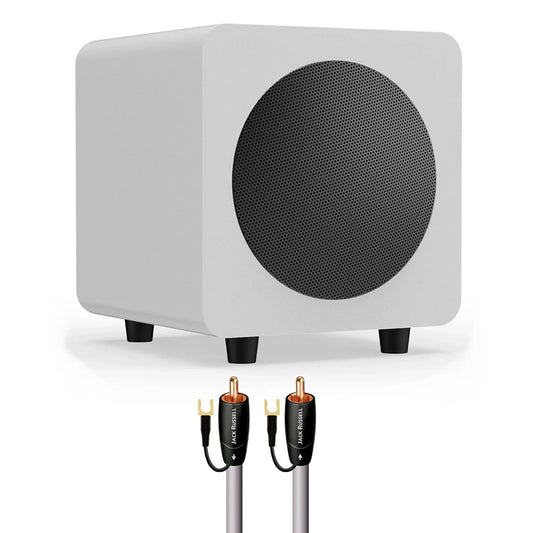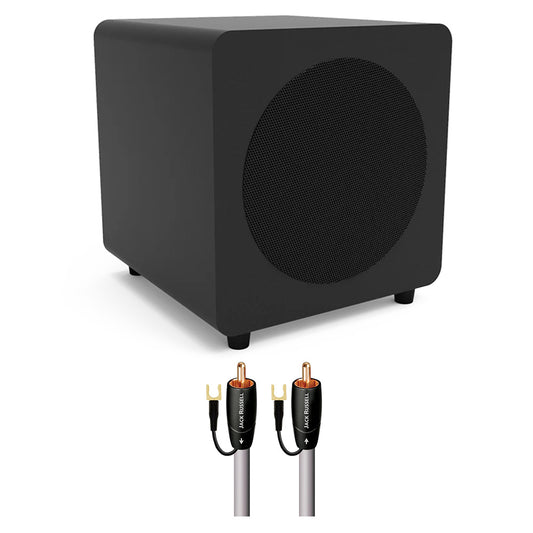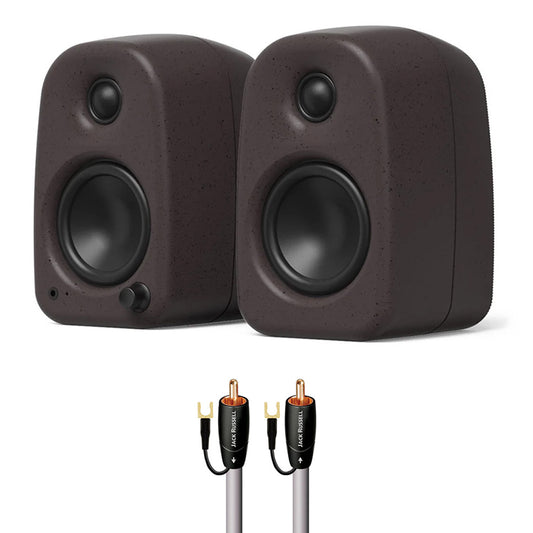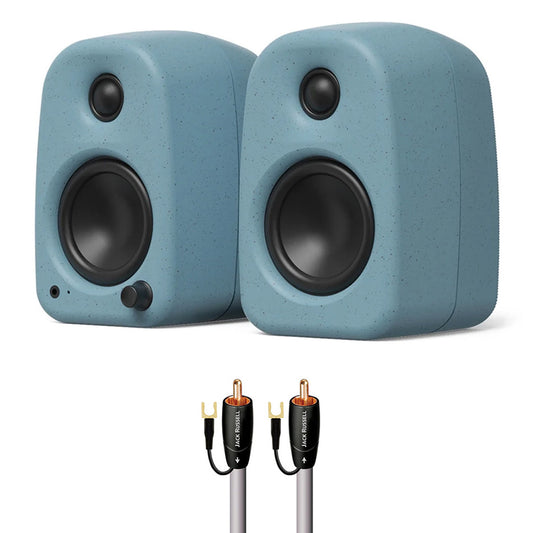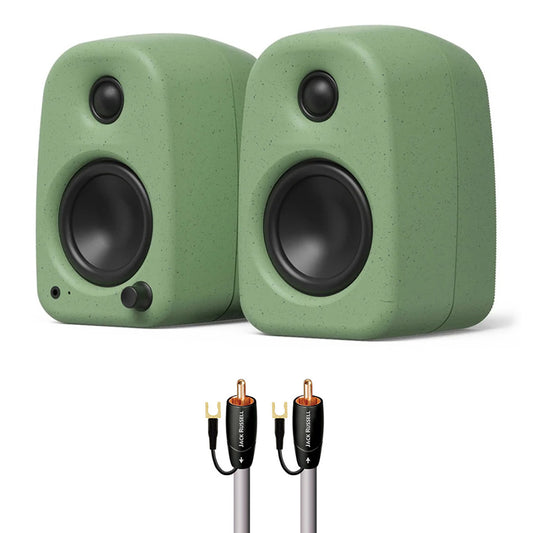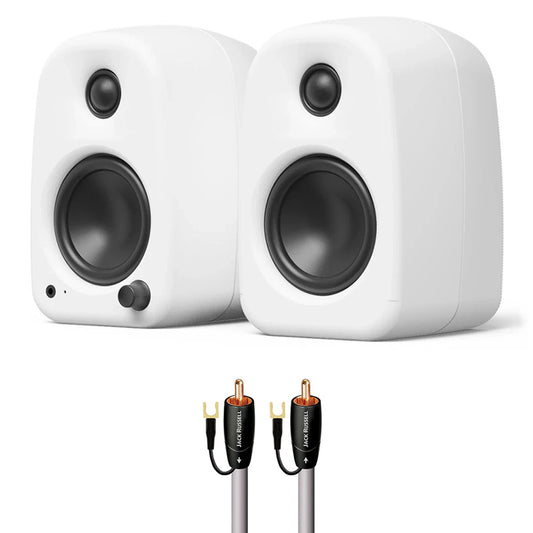


Connect amplifiers, receivers, soundbars, and AVRs to subwoofers with a purpose-built RCA cable designed for clean, reliable signal transfer. Jack Russell features Solid Long-Grain Copper (LGC) conductors to reduce distortion caused by grain boundaries, Foamed-Polyethylene insulation to maintain dynamic contrast, and a Metal-Layer Noise-Dissipation system that helps dissipate and drain high-frequency noise away from the signal path. The result is more naturally beautiful and detailed music, more intelligible dialogue, and thrilling sound effects for home theater and music systems.
Features
- Solid Long-Grain Copper (LGC) Conductors
- Foamed-Polyethylene (FPE) Insulation
- Metal-Layer Noise-Dissipation
- Cold-Welded, Gold-Plated Terminations
- Direction-Controlled Conductors
Solid Long-Grain Copper (LGC) Conductors
The surface quality is critical because a conductor can be considered as a rail-guide for both the electric fields within a conductor and for the magnetic fields outside the conductor. High-purity LGC minimizes distortion caused by grain boundaries and maximizes linear RF Noise-Dissipation.
Foamed-Polyethylene (FPE) Insulation
Any solid material adjacent to a conductor is part of an imperfect circuit and absorbs energy. Some of this energy is stored and then released as distortion. Because air absorbs next to no energy and Polyethylene is low-loss and has a benign distortion profile, Foamed-PE, with its high air content, causes much less of the out-of-focus effect common to other materials.
Metal-Layer Noise-Dissipation
It’s easy to accomplish 100% shield coverage. Preventing captured radio-frequency interference from modulating the equipment’s ground reference requires AQ’s Noise-Dissipation. Traditional shield systems typically absorb and then drain noise/RF energy to component ground, modulating and distorting the critical reference ground plane, which in turn causes a distortion of the signal. Noise-Dissipation “shields the shield,” absorbing and reflecting most of this noise/RF energy before it reaches the layer attached to ground.
Cold-Welded, Gold-Plated Terminations
Instead of solder, the process employs a high-pressure technique. Because the ground shells are stamped instead of machined, the metal used can be chosen for low distortion instead of machinability.
Direction-Controlled Conductors
All drawn metal strands or conductors have a non-symmetrical, and therefore directional, grain structure. AudioQuest controls the resulting RF impedance variation so that noise is drained away from where it will cause distortion.